
With over 800km of trails traversing the eclectic geology of Nidderdale National Landscape, there’s some marvellous walking to be had. We’ve curated some of the best for you here. There are gentle strolls through the woods, enlivening walks around windswept reservoirs, and demanding hikes from valley to moor and back again. You can glimpse rare wildlife and piece together history from relics scattered across the landscape. But above all you’ll find sustenance for the soul.
Walks from Pateley Bridge
Naturally, Nidderdale’s only town is the starting point for several established walks.
Brimham Rocks-Pateley Bridge Circular
This flagship National Trust route takes you 8.4 miles (or more if you’re feeling particularly sprightly and fancy a detour) from the valley floor of Pateley Bridge to the high, windswept plateau of Brimham Rocks. The route takes in some of the Nidderdale Way and features Brimham’s peculiar prehistoric monoliths, wind-sculpted over millennia into unbelievable shapes.
You have a couple of options. Either park at Brimham Rocks (it’s a National Trust car park so there is a fee) and head back out towards Pateley Bridge along the banks of the River Nidd, enjoying the town’s delights before looping back along the Nidderdale Way. Or park at Pateley Bridge, follow the river or the Nidd Way to the Rocks, enjoy the spectacle of stone and the famous ice cream served at the refreshment kiosk, then head back to the town. Either way, you’re in for a testing but deeply rewarding walk. Find more details on the National Trust’s route guide.

Yorke’s Folly, Guise Cliff & The Yorkes of Bewerley Trail
Bewerley is an ancient little village with links to Fountains Abbey. It’s just across the river from Pateley Bridge. Turn your gaze to the hills overlooking the village and you’ll see a strange protrusion (or two) jutting up towards the sky. That is Yorke’s Folly, and the walk up to it is quite a treat.
It’s believed the folly was commissioned around 1820 by the Yorke family of Bewerley Hall, purely for the purpose of providing employment to locals who were enduring hard times. An act of altruism that benefits us walkers some 200 years later.
This popular walk takes you from the village up across the moors, beginning with a steepish climb that will get the legs working a bit. Once you’ve reached the folly, marvelled at the handiwork and taken in the views, you traverse the steep sandstone wall of Guise Cliffe. Care is advised, due to the hidden fissures in the rock. Mind your step and keep pooches on leads.
From there you have a couple of options. You can skirt back along the edge of Guisecliffe Wood towards Bewerley. Or for a longer excursion, follow this route from Komoot, heading through the woods, where you’ll find the picturesque tarn. Then carry on down towards Glasshouses, admire the lakeland and the historic dam, and then the final stretch back to Bewerley.
The walk is between 3 and 5 miles, depending on which route you take. People usually park in the layby on Nought Bank Road near Bewerley, but if it’s full you might need to look at the pay & displays in Pateley Bridge.
Scotgate Ash Trail
This scenic trail offers a less rugged option than the Yorke’s Folly trail. It has some similarities – beginning in Pateley Bridge, it also offers stunning views across the Nidd valley. In fact, on a clear day you might be able to see the columns of Yorke’s Folly across the valley. However, we’ve chosen this walk as it offers a glimpse of the area’s Victorian industrial heritage.
Traditionally the route begins with a climb up Pateley Bridge’s High Street and continues up a path to the hills. You’ll see the 14th-century ruins of St Mary’s Church just off the path as you leave the town – well worth a brief detour. Keep climbing, and eventually Scotgate Ash Quarry will open out before you. You’ll see the old quarry house and be able to trace the old inclined railway used to transport stone down the hill.
Towards the end of the trail, you descend Silver Hill, which offers great views across Gouthwaite reservoir. And as you head back to Pateley Bridge, you’ll pass the site of the old Nidd Valley Light Railway station.
You can find full details on the walk in this guide by the Upper Nidderdale Landscape Partnership.
Nidderdale’s resplendent reservoirs
Swinsty and Fewston Reservoir Circulars
Let’s kick things off with a firm Nidderdale favourite, which offers a range of options depending on how sprightly you’re feeling. While both reservoirs offer majestic views and enjoyable walking, Swinsty makes for a slightly more accessible three-mile loop. Fewston is a mile longer and contains more undulating trails, so it feels nicely off the beaten track. Around Swinsty Reservoir you’ll pass Swinsty Hall, a stunning Elizabethan mansion and home to someone who’ll be familiar to English football fans.
On the opposite side, Washburn Heritage Centre, open April to October, makes for a pleasant detour. Take the trail up through the woods on the northern side of Swinsty Reservoir, and you’ll find it adjoining Fewston Church. The volunteers’ homemade cakes are legendary, and a warm welcome is always guaranteed. Their archive offers an interesting peak into local history (it provided much of the material for our blog on the history of Timble).
Of course, if you’re feeling energetic, do both in a 7-mile loop.
Sat between Skipton and Harrogate, the reservoirs are easily accessed from all directions and there are three car parks with reasonable fees.

Thruscross Reservoir Walk
A bit further up the Washburn Valley, you’ll find the more recently built Thruscross Reservoir. This offers a sturdier and slightly wilder challenge, with the paths a bit steeper and more uneven than Swinsty and Fewston’s. That said, it’s well worth the additional effort, with sweeping moorland, tranquil woods and cracking views to enjoy on the way around, as well as the imposing dam.
When the water level drops,you can see the remnants of the village that was submerged when the reservoir was built. And it’s also a great spot for seeing wildlife, with over 100 species of birds resident to the area.
There are managed car parks and charges apply.
Woodland walks
If you’re looking for seclusion and tranquility, Nidderdale offers plenty of whispering woodland perfect for a stroll.
Hackfall
Hackfall is a picturesque Grade I listed woodland garden, created in the 18th century by the long-standing Yorkshire MP William Aislabie. Routes range from a gentle 0.75-mile stroll to the 4.5-mile ‘Hackfall Explorer’.
It’s no stroll in the park – you’ll navigate steep hills, steps, and riverside paths along the River Ure to discover hidden cascades like Forty Foot Fall and Alum Spring.
The woods are dotted with romantic, purpose-built follies, including Fisher’s Hall, Mowbray Castle, and ‘The Ruin’ – a former banqueting house perched high on a terrace with sweeping views of the valley.
You’ll find Hackfall at the northern end of Nidderdale towards Masham. It offers a deeply cultural and intimate excursion, a blend of wild nature and 18th-century high-society landscaping that makes it well worth a trip.
Roadside parking is free but can fill up fast. An alternative option is to park in Masham and walk a couple of miles along the River Ure to Hackfall, a walk that more than rewards the added exertion.
Timble Woods and Timble Ings
Timble Woods and Timble Ings are two spots of woodland, close to the village of Timble and connected by a narrow strip of forest. Timble Woods is smaller, and sits at the edge of Fewston Reservoir. Timble Ings is to the west, and is a conservation area containing Timble Ponds, an important habitat for dragonflies and endangered water voles.
The woodland sections feature several miles of wide, well-surfaced forest tracks ideal for a wander or indeed a gentle bikeride. This route, suggested by Yorkshire Water, who manage the woods and reservoir, takes in both patches of woodland in a bracing 6-mile loop.
Timble Ings often forms part of more strenuous adventures that take in some of Nidderdales moors. There are numerous places to park along the surrounding roads.
Trying Trails
There’s plenty of scope for a sterner walking challenge in Nidderdale. And of course, whatever you choose, your exertions are rewarded with stunning views and the National Landscape.
Lippersley Pike
This quiet, off-the-beaten-path route is prized by seasoned local walkers and moorland enthusiasts. The moderate 7-mile hike takes around 3 to 4 hours and begins just west of Timble at Lane End. It leads walkers away from the busier reservoir trails and up into the expansive, solitary heights of the local moors
You’ll climb steadily through coarse heather to Ellarcarr Pike and along the High Badger Gate path to Lippersley Pike, where a large shelter cairn and an 18th-century standing stone await.
The route reaches its 335-metre peak near Gawk Hall Gate before descending past ancient mileposts, navigating the boggy stretches of Sug Marsh, and joining an old Roman road across Blubberhouses Moor.
Finally, the rugged terrain gives way to the shelter of Timble Ings. As well as the ponds we previously mentioned, you’ll also wander past forest keepers’ buildings that have been reclaimed by Mother Nature.
A great choice of walk if you’re looking for rugged solitude, sweeping views, and historical intrigue.
The Stean Trail
This 4.5-miler takes in everything that makes the Yorkshire countryside special. Start off in Lofthouse, one of those proper Dales villages where grey stone cottages huddle together, surrounded by a sea of greenery. You’ll soon pass the famous How Stean Gorge, with views down through the dramatic limestone rocks (the gorge itself is part of the activity centre, which requires payment for full access – it also offers a range of adventurous pursuits if you’re craving something more high-octane).
After the gorge, you’ll soon find yourself in the serene seclusion of Cliff Woods. You’ll then skirt the rolling meadows as you loop back to Lofthouse. A couple of hours that will pass in no time. See the full route details in this guide by the Upper Nidderdale Landscape Partnership.
Pateley Bridge, with its award-winning high street, is very close to Lofthouse. It’s certainly worth having a look around after completing your walk.
A bit of art and history
Coldstones Cut and Toft Gate Lime Kiln
Not all great walks need to stretch for miles. This short exploration on Greenhow Hill packs in plenty of drama. It’s certainly not one for a seasoned walker looking for a challenge, but the views and the unique work of art make it worth a mention.
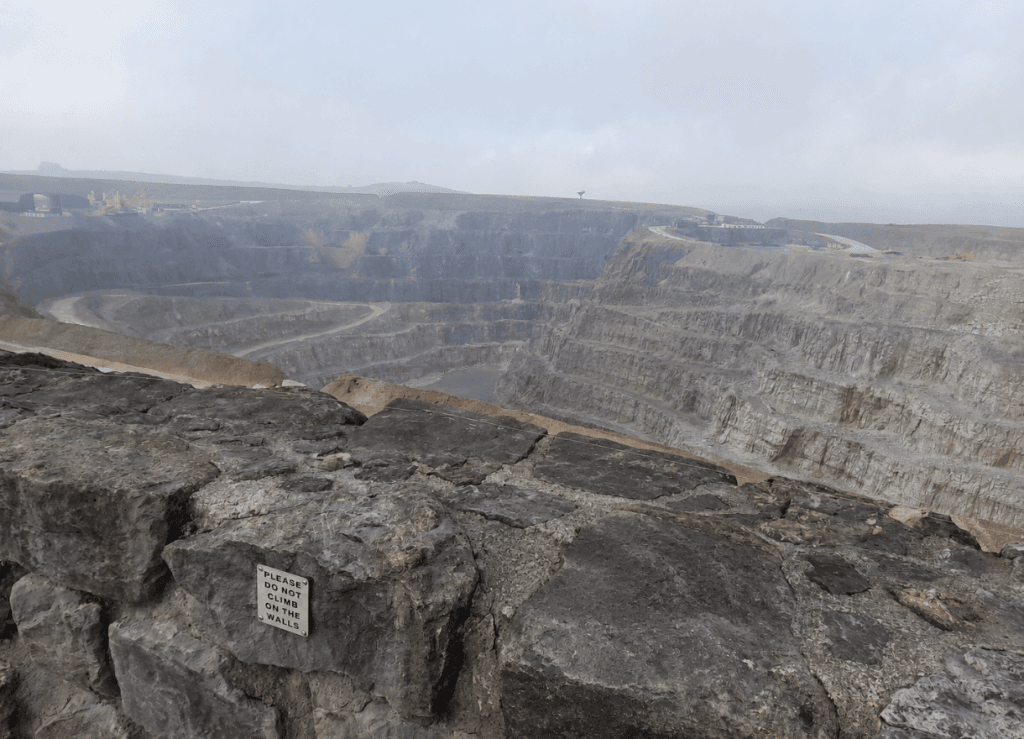
Begin in the small free car park. Follow the path a short way then exit to the left, following a short loop around to the remarkably preserved lime kilns, a relic of Nidderdale’s industrial past. You’ll rejoin the path as it curves up to the right towards Coldstones Cut. This vast stone sculpture is bigger than it looks in pictures. The great walls, made from limestone slabs from the quarry below, loom over you as you approach.
Follow the curving corridors of stone and you’ll be rewarded with astonishing views across Yorkshire – some visitors report seeing York Minster on a clear day. What also makes this place fascinating are the views down into the working quarry, which has been in use for over 200 years. It really is a unique experience seeing art and industry collide in such a beautiful setting.
Bewerley Industrial Heritage and Lead Mines Trail
Let’s round off our selection with a beauty. This one is not for the faint-hearted, but it rewards those who take it on, gathering many of the landmarks we’ve already mentioned into one great ramble. The 10-mile circular route begins at the Nidderdale Museum on Pateley Bridge’s King Street, climbing through the ancient village of Bewerley before ascending to the high moorland of Greenhow Hill.
From there, the trail takes in the Toft Gate Lime Kiln and Coldstones Cut. The route then descends into the haunting landscape of the Cockhill Lead Mines, where spoil heaps and ruined engine houses sit softened now by time, before following a stretch of the Nidderdale Way back into town. Strenuous, absorbing, and steeped in history.
This remarkably detailed guide from Paul Beal Walks covers the full route, as well as the fascinating history behind the landmarks.
The perfect base
We hope our selection of walks has piqued your spirit of adventure, and you’re already planning your next foray into the Yorkshire countryside.
The Timble Inn sits at the heart of this landscape: a Grade II listed 18th-century coaching inn offering five-star accommodation and AA two-rosette dining, just minutes from the reservoirs and moorland tracks described above. If you’re planning a walking break in Nidderdale, it makes rather a good base, or if you’re only here for the day, a great spot for your post-walk refreshment.
Our friendly team would love to hear about your adventures in our neck of the woods.